
Creatine: Not Just for Men
Once upon a time, creatine lived firmly in the realm of not for girls gym supplements. Aimed at those who wanted maxim “gainz”, the creatine loaded shaker bottle could be spotted in the free weights section - a place you only ventured into if you could grunt and throw dumbbells with the best. Recently however, it’s shed the sexist, Yorkie-like marketing and creatine has muscled its way into midlife wellness conversations. With claims of sharper thinking, improved energy and muscle resilience during menopause, is there substantiating evidence or is this another ruse to part with our cash? Before you rush to order some, let’s take a closer look at what the science says (so far), and see if creatine really deserves a place in your kitchen cupboard.
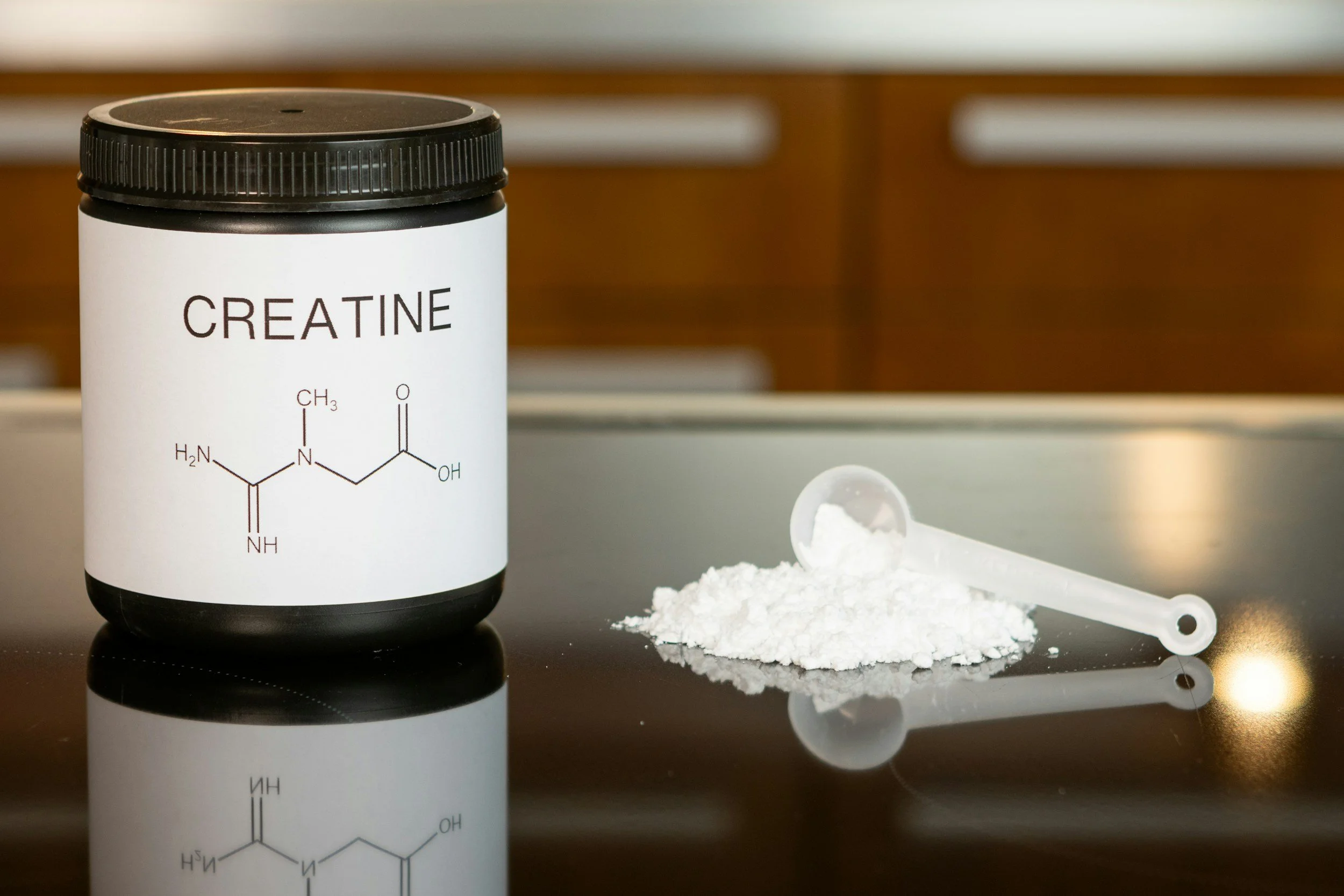
What Creatine Is (And Why It’s Been Misunderstood)
Creatine isn’t new or fancy. It occurs naturally in our muscles (and is found in foods like meat and fish). Its main job is to help recycle energy quickly during short bursts of activity - think sprinting, lifting, or carrying all the shopping bags in one trip because you refuse to go back to the car. Creatine is like a battery pack, helping to provide a continuous supply of energy to your muscles which can help improve muscle strength and reduce recovery times.
Your body can make its own creatine (from amino acids) but how much is highly variable. Genetics, how much muscle you have, how you exercise, age and hormones all play a part. You can also get some from your diet, if you're not vegetarian or vegan - red meat, fish and poultry naturally contain creatine. Supplementing with creatine can significantly boost your muscle stores (i.e. your battery pack) but again, the response varies significantly from person to person.
In the early 1990’s, creatine picked up a “gym bro” reputation. Its marketing and initial popularity focused heavily on its immediate and visible effects: bigger muscles and greater strength, rather than any wider benefits and long-term health. Partly because we didn’t know about these at the time.
Now, as research is exploring its role outside the gym - in brain function, bone health and in age-related muscle loss - creatine is having a second wind. Whilst the nuance is being revealed, we still have a way to go to understand the full implications of creatine.
What The Research Says (And What It Doesn’t…Yet)
Let’s start with the good stuff. There’s a growing body of research suggesting creatine may offer several benefits for women in midlife and beyond. Studies have shown it may help preserve muscle mass and strength - both of which naturally decline with age and are accelerated through menopause due to falling oestrogen levels. Since muscle plays a role in metabolic health, mobility and bone density, anything that helps maintain it is worth paying attention to.
There’s also emerging evidence that creatine could support brain health. Our brains use a lot of energy, and creatine helps cells regenerate it efficiently. Some small studies have linked supplementation to improved mood, memory, and fatigue resistance, though these findings are early, inconsistent, and far from conclusive.
Before we get too excited, here’s what’s not yet clear:
The research on creatine and menopause is still limited - most studies are small, short-term, and have focused on pre or post menopausal women. We need specific research to examine the effects of creatine supplementation on women in perimenopause, when hormone fluctuations are greatest.
Benefits seem more noticeable when creatine is combined with resistance training and / or cognitive work. It’s certainly not a magic bullet that provides benefits in isolation.
Not everyone responds the same way; around 20–30% of people are “non-responders” and we need to better understand why.
There is a lack of research looking at the long-term effects of creatine supplementation, especially when it comes to bone health and cognitive function.
Interaction effects between creatine supplements and HRT over extended periods also need further examination.
In short: the evidence is promising, not proven. Creatine isn’t a miracle supplement but it might be a useful one.
If You’re Thinking About Trying It
If you’re curious, the good news is that creatine is well researched compared to many other supplements. It’s generally considered safe for most people when taken correctly. This includes using creatine for 28 days alongside HRT.
The form used in almost all studies is creatine monohydrate. You might see adverts trying to convince you that “buffered,” “micronised,” or “liquid” versions are superior and come in extra shiny packaging. They typically cost more but are not any more effective.
A typical effective dose is around 3–5 g per day. You can take it at any time, with or without food, though pairing it with something containing carbohydrates or protein can improve its absorption. A “loading phase” as was the advice in the 1990s, is not necessary. Just take it consistently - it’ll build up in your muscles over a few weeks and side effects will be less likely.
Hydration is key. Creatine helps draw water into the muscle cells, which is part of how it works. So you may need a bit more fluid than usual. Mild bloating at first isn’t uncommon but tends to settle quickly.
The claim that creatine causes kidney damage is unfounded. Research has consistently shown that creatine supplementation, when taken at recommended doses, is safe and does not impair kidney function in healthy people. If you have kidney issues or take medication that affects kidney function, it’s worth checking with your medical team before adding creatine to the mix.
It’s also fine to skip creatine entirely. If you’re eating a varied diet that includes meat or fish and you’re doing some kind of resistance or strength work, you may already have enough. And if you’re vegetarian or vegan, creatine levels can be lower - so you might notice a difference with supplementation, but there is no evidence to suggest a lack of it is a health concern.
The Bottom Line
Creatine might not have the glamour of collagen or the rustic charm of bone broth, but it’s quietly accruing solid science behind it. For women in midlife, it could be a useful ally - particularly if you’re lifting weights, rebuilding strength, or just trying to feel a bit more energised.
But it’s not a magic fix. No scoop of powder can replace regular movement, nourishing food, sleep, stress reduction, having a sense of purpose and fun - the foundations that actually support long-term health. If you like the idea and it fits your lifestyle, great. If not, you’re not missing out on a secret elixir.
💭 Over to you
Have you ever tried creatine, or been tempted to? Do you think the growing hype around supplements for menopause helps or confuses? I’d love to hear your thoughts in the comments 👇
Mel x